
Leading Edge Dental | Leesburg, FL
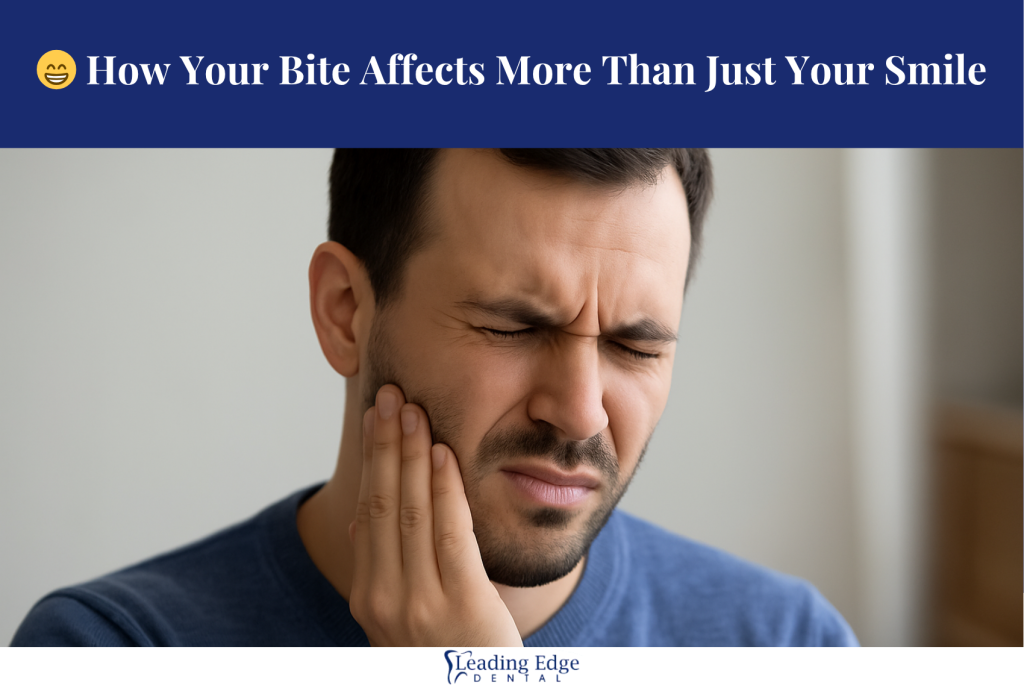
When most people think of a “good bite,” they picture straight, even teeth. But your bite—also called occlusion—is about much more than looks. It’s how your upper and lower teeth fit together when you chew, speak, and rest your jaw.
At Leading Edge Dental in Leesburg, FL, Dr. Vaziri understands that bite alignment plays a crucial role in oral function, comfort, and long-term dental health. Even small irregularities can lead to worn teeth, headaches, jaw tension, and TMJ problems. Fortunately, modern dentistry offers precise solutions to restore balance and harmony to your bite—and your life.
What Is Bite Alignment?
Your bite refers to how your teeth, jaw joints, and muscles work together. Ideally, all components align in a way that allows smooth, even contact between your upper and lower teeth.
When that balance is disrupted—through missing teeth, clenching, grinding, or natural misalignment—it’s called malocclusion. This imbalance can create pressure and tension that ripple through your entire jaw system.
Common Signs of a Misaligned Bite
Many adults live with bite problems without realizing it.
Symptoms may include:
- Jaw pain or popping when chewing
- Headaches, especially upon waking
- Worn, chipped, or cracked teeth
- Tooth sensitivity or uneven wear patterns
- Neck or shoulder tension
- Difficulty chewing or speaking comfortably
Left untreated, a misaligned bite can lead to chronic TMJ disorders and ongoing damage to the teeth and jaw joints.
The Connection Between Your Bite and TMJ Health
Your temporomandibular joints (TMJ) connect your lower jaw to your skull and act like hinges, allowing your mouth to open, close, and move smoothly. When your bite is uneven, these joints can become strained, leading to pain, stiffness, and even headaches.
Dr. Vaziri takes a comprehensive approach to TMJ-related issues, examining the bite relationship, jaw movement, and muscle tension using digital imaging and bite analysis to identify the root cause.
How Dr. Vaziri Restores Bite Balance
Every patient’s bite is unique, which is why Dr. Vaziri creates customized treatment plans that address both functional and aesthetic goals. Depending on your needs, treatment may include:
1. Bite Adjustment (Occlusal Equilibration)
Small reshaping adjustments to the biting surfaces of the teeth can correct minor imbalances and eliminate uneven pressure points.
2. Porcelain Crowns or Restorations
For teeth that are worn or fractured from grinding or misalignment, porcelain crowns restore proper height, alignment, and symmetry.
3. Full-Mouth Rehabilitation
For patients with advanced wear, missing teeth, or chronic TMJ symptoms, a full-mouth reconstruction rebalances the entire bite—often combining implants, crowns, and restorations for long-term stability and comfort.
4. Nightguards or Bite Splints
Custom appliances can protect teeth from nighttime grinding and relieve pressure on the TMJ while allowing muscles to relax.
The Benefits of a Balanced Bite
Correcting bite alignment does more than relieve discomfort—it protects your smile for years to come:
- Reduced jaw and muscle tension
- Less wear and tear on teeth
- Improved chewing and digestion
- Enhanced facial balance and comfort
- Long-term stability of restorations and implants
A properly aligned bite supports not only oral health but also overall comfort and confidence.
Q&A: Bite Alignment and TMJ Health
Q: How do I know if my bite is off?
A: Common signs include sore jaw muscles, headaches, and uneven tooth wear. A professional evaluation can confirm the cause and extent.
Q: Can grinding my teeth cause bite problems?
A: Yes. Chronic grinding (bruxism) can wear down enamel and alter how your teeth come together, worsening bite imbalance.
Q: What if I already have missing teeth?
A: Missing teeth can cause other teeth to shift and disrupt your bite. Dental implants or bridges can restore alignment and prevent further issues.
Q: Is TMJ pain treatable without surgery?
A: Absolutely. Most TMJ-related symptoms can be managed with conservative treatments such as bite adjustments, custom splints, and restorative care.
Q: How long does a full-mouth rehabilitation take?
A: It depends on the extent of care needed. Dr. Vaziri designs each phase to rebuild comfort, function, and aesthetics with precision and efficiency.
Restore Balance, Comfort, and Confidence
Your bite affects more than your smile—it influences how you feel every day.
At Leading Edge Dental, Dr. Vaziri combines advanced diagnostics, precision restorations, and compassionate care to create harmony between your teeth, bite, and jaw.
Leading Edge Dental
📍 10601 US-441 Suite C-1B, Leesburg, FL 34788
📞 (352) 365-6442
🌐 Visit Our Website leadingdental.com Make an appointment leadingdental.com/appointments