
Leading Edge Dental | Leesburg, FL
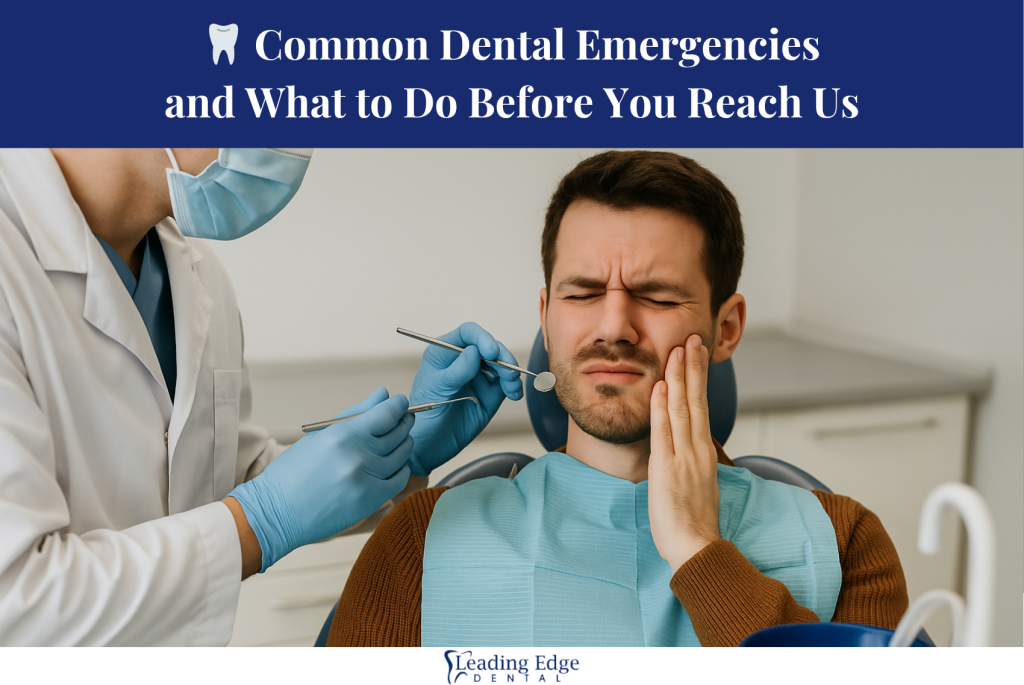
Dental emergencies can happen when you least expect them—a cracked tooth during dinner, a sudden ache that wakes you up at night, or a filling that falls out right before an important meeting. Whatever the case, prompt attention from an experienced dentist can make all the difference in protecting your oral health and preventing further complications.
At Leading Edge Dental in Leesburg, FL, Dr. Vaziri and our caring team are here to help you stay calm, informed, and prepared when the unexpected happens. Here’s what you need to know about common dental emergencies—and what to do before you reach our office.
When Is It a Dental Emergency?
A dental emergency is any situation involving pain, bleeding, swelling, or trauma that requires immediate or same-day attention. Even if the discomfort seems mild, underlying issues like infection or nerve damage can progress quickly if not treated.
Common signs of a dental emergency include:
- Sharp or persistent tooth pain
- Cracked, broken, or knocked-out teeth
- Lost fillings or crowns
- Gum or facial swelling
- Abscess or infection
- Severe bleeding after dental work or injury
Common Dental Emergencies and How to Handle Them
1. Toothache or Severe Pain
Rinse with warm salt water and gently floss to remove any trapped debris. Avoid placing aspirin directly on the tooth—it can irritate gum tissue. If the pain persists, contact us immediately to identify and treat the cause, such as decay or infection.
2. Broken or Chipped Tooth
Rinse your mouth and save any broken fragments if possible. Apply a cold compress to reduce swelling. Even small chips should be examined promptly, as cracks can worsen or expose sensitive inner layers of the tooth.
3. Knocked-Out Tooth
Time is critical! Handle the tooth by the crown (not the root), gently rinse it with water, and try to place it back in the socket if possible. If that’s not possible, store it in a cup of milk or saliva and call our office right away. The sooner we see you, the better the chance of saving the tooth.
4. Lost Filling or Crown
If a crown comes off, try to keep it safe and bring it with you. You can use a small amount of toothpaste or dental adhesive (found at most pharmacies) to temporarily reattach it until you reach our office. Avoid chewing on that side to prevent further damage.
5. Abscess or Gum Swelling
An abscess indicates an infection that needs immediate care. Rinse with salt water and avoid pressing on the area. Do not try to pop it. Contact us as soon as possible—untreated dental infections can spread and affect your overall health.
How We Treat Dental Emergencies
Dr. Vaziri uses advanced diagnostic tools such as digital X-rays and 3D imaging to quickly assess your condition and determine the best treatment. Depending on your situation, treatment options may include:
- Root canal therapy
- Porcelain crown restoration
- Emergency extraction
- Same-day pain relief and infection management
If you’re feeling anxious, IV sedation or oral sedation may also be available to help you relax during your emergency procedure.
Preventing Future Dental Emergencies
Many emergencies can be avoided with regular preventive care. Routine checkups allow us to spot early warning signs like fractures, decay, or failing restorations before they cause pain or infection. Wearing a nightguard (if you grind your teeth) and a mouthguard during sports can also protect your smile from sudden trauma.
Q&A: Dental Emergencies at Leading Edge Dental
Q: Should I go to the emergency room for a dental problem?
A: ERs can help with pain management or bleeding, but they’re not equipped for dental repairs. Whenever possible, contact our office first—Dr. Vaziri can often see you the same day for dental-specific treatment.
Q: What if my toothache goes away on its own?
A: Pain relief doesn’t always mean healing. The nerve may have died, masking a deeper infection. It’s still important to schedule an exam as soon as possible.
Q: Can I prevent losing a tooth that’s been knocked out?
A: Yes—if treated within 30–60 minutes, there’s a good chance we can reimplant it successfully. Keep it moist and avoid touching the root.
Q: How can I manage swelling before I get to the office?
A: Apply a cold compress externally and take an over-the-counter pain reliever. Avoid heat, which can worsen inflammation.
Q: Do you accept emergency walk-ins or after-hours calls?
A: We encourage patients to call ahead whenever possible, but we do our best to accommodate urgent cases promptly.
Contact Leading Edge Dental for Emergency Dental Care
If you’re experiencing a dental emergency, don’t wait—timely care can save your tooth and your smile.
At Leading Edge Dental, we’re committed to compassionate, precise treatment that relieves pain and restores comfort quickly.
Leading Edge Dental
📍 10601 US-441 Suite C-1B, Leesburg, FL 34788
📞 (352) 365-6442
🌐 Visit Our Website leadingdental.com Make an appointment leadingdental.com/appointments